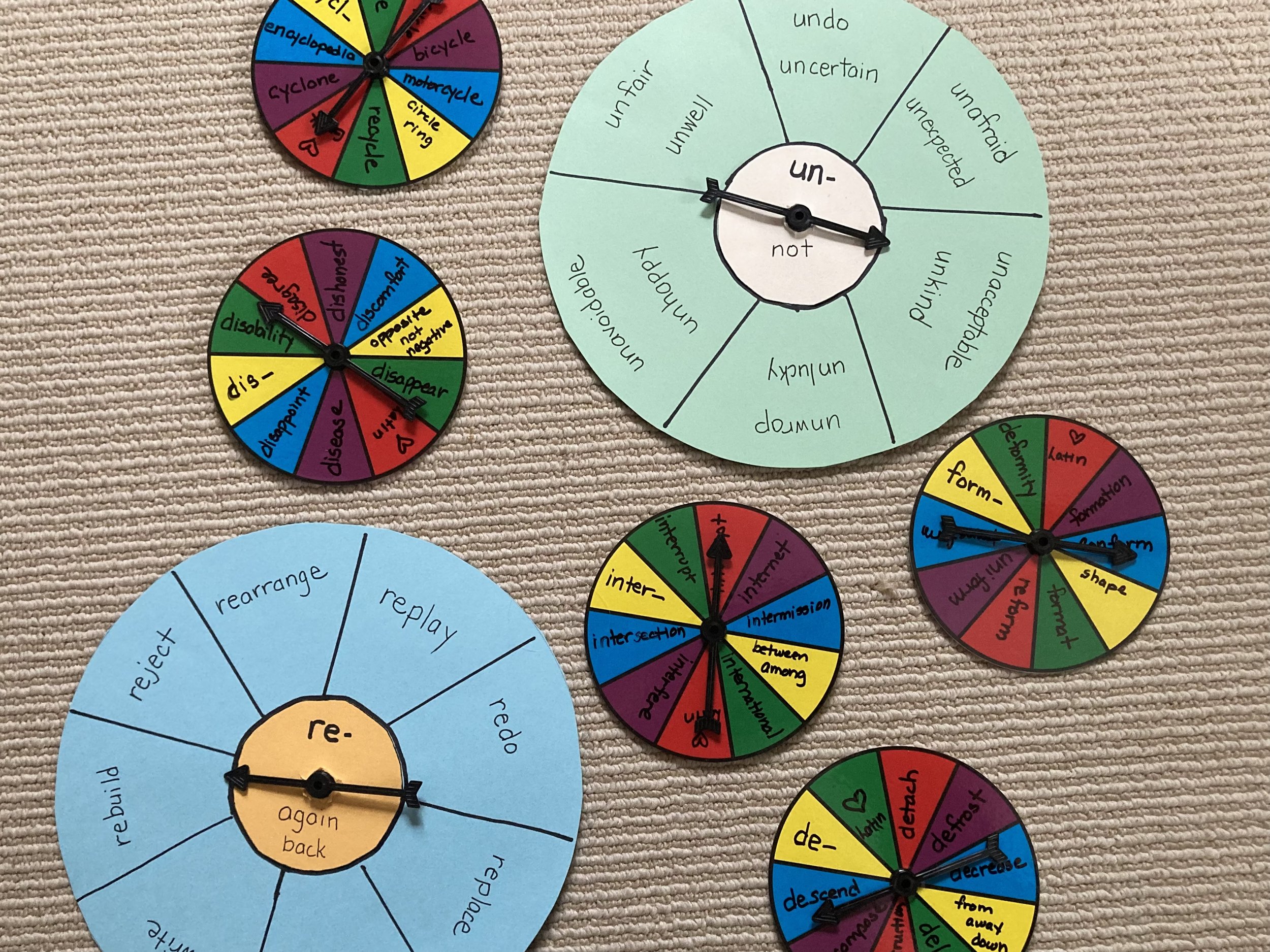
In the first two parts of this series, we looked at the initial aspects of morphology: prefixes and suffixes. In most phonics programs, suffixes are taught first, followed by some prefixes. However, instruction around Latin and Greek roots is usually postponed until the intermediate grades: Grades 4, 5 and beyond.
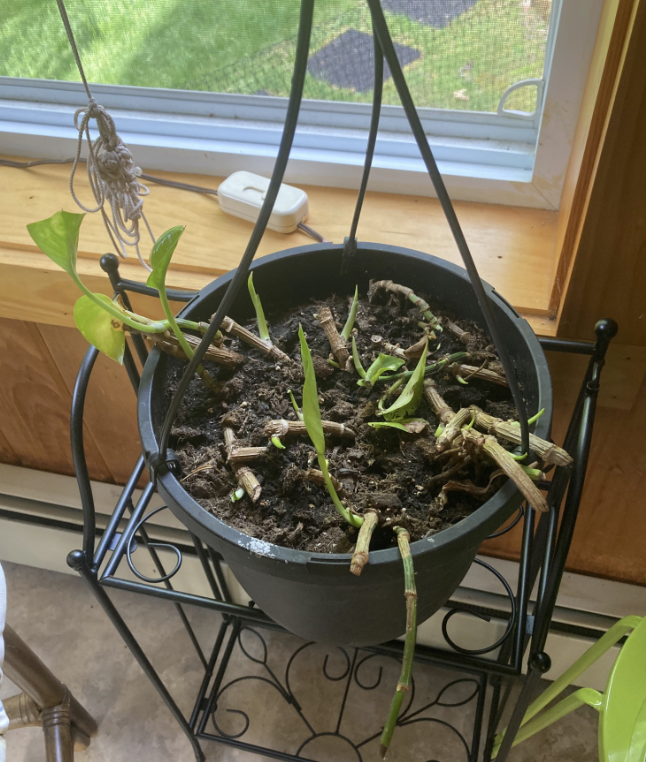
As an avid gardener, I know the importance of roots. Recently my poor niece, who is NOT a gardener, couldn’t understand why her pothos plant was dying. After all, she was watering it weekly. But the leaves were turning brown and falling off. Aunt Linda to the rescue! When I removed the plant from the pot, the poor thing was completely root bound! A problem that was hidden from her eyes. New pot. New soil. Some gentle care. It is slowly coming back to life.
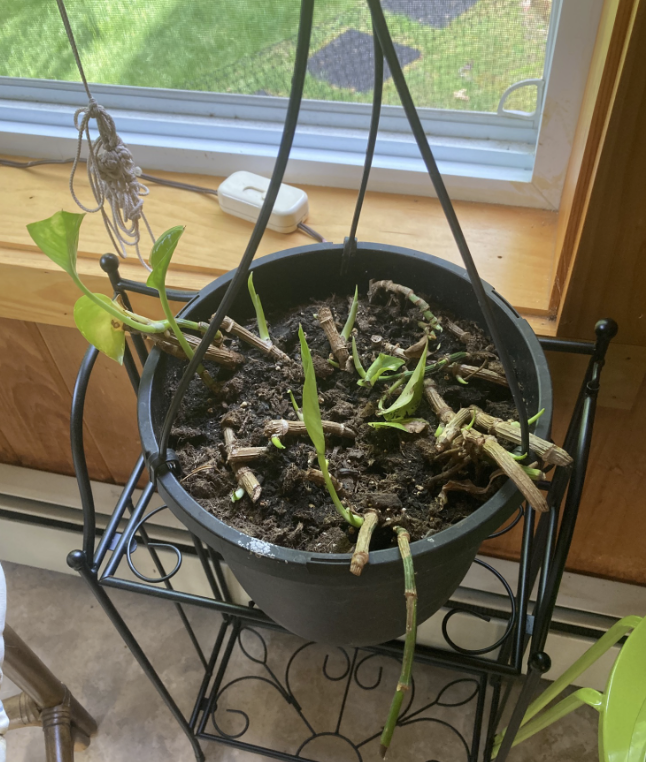
In words, roots can also be ‘hidden’ from the eyes of readers unless we explicitly and directly teach them. Because roots are so ubiquitous in English, just a little teaching of Latin and Greek roots reveals many possibilities for word learning. Let’s begin with an overview.
Overview
Bound Roots
A bound root is a morpheme (meaning unit) that rarely stands on its own. It must have some type of prefix or suffix added to it to make a free-standing morpheme or word. It carries the main meaning in a word. (hydro - plane)
Base Words
Base words are free-standing words or free morphemes. If you take off the prefix or suffix, you still have a word.
Base Word Bound Root
rereading audible
reread aud-ible
read aud
a word not a word
Because base words are taught first, it can be tricky for readers to find bound roots in words (vision, audience). These roots need to be explicitly taught in order for students to use them to reveal meaning.
Latin Roots
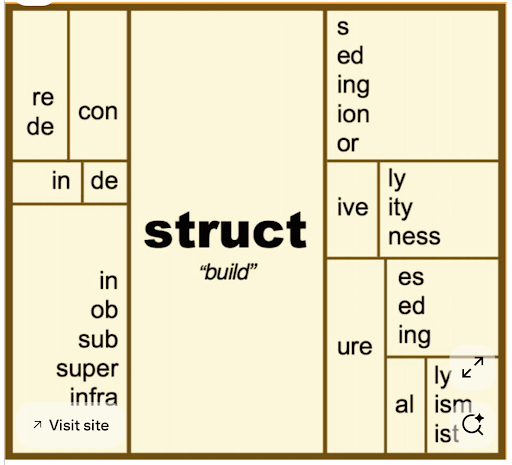
Latin became the language of the church and the academy, so Latin roots are usually found in formal, academic, and literary texts. Spellings of Latin roots usually follow simple spellings and do not use vowel teams (struct, vis, cred). Therefore, Latin roots are usually taught first.
Greek Roots
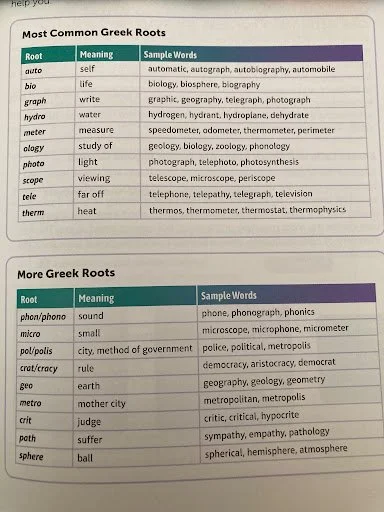
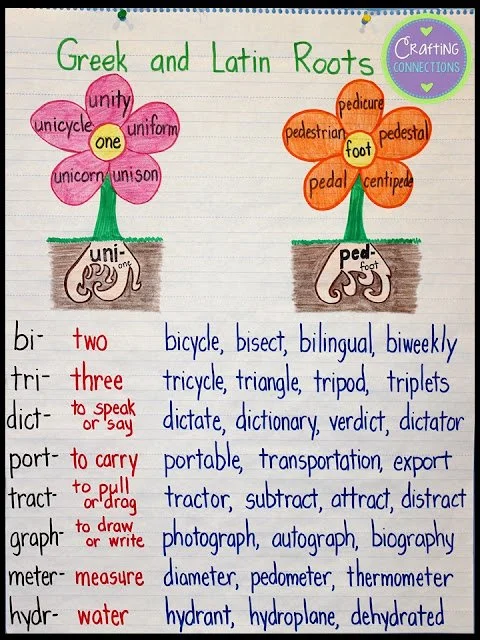
Similar to Latin roots, Greek roots are bound; they cannot stand alone. They are often found in the technical vocabulary of science and math. You may wish to introduce Greek roots in the content area in which they appear. Greek roots differ from Latin roots due to their location and sound-spelling patterns
Location: While Latin roots appear only at the beginning or middle of words (spectacular, inspection), Greek roots can be combined with other roots at any position in a word (phonograph, microphone).
Spelling: Greek roots have unique sound spellings. For example:
ph = /f/
ch = /k/
y = /i/
These unique sound spellings can serve as a clue that the word has a Greek root.
Tips
Be sure to point out to students that some roots have the same meaning, but only a similar spelling.
duc, duct (reduce, conduct)
metr, meter (symmetric, photometer)
As with prefixes and suffixes, start instruction with the most common Latin roots as identified below by Wiley Blevins, 2023.
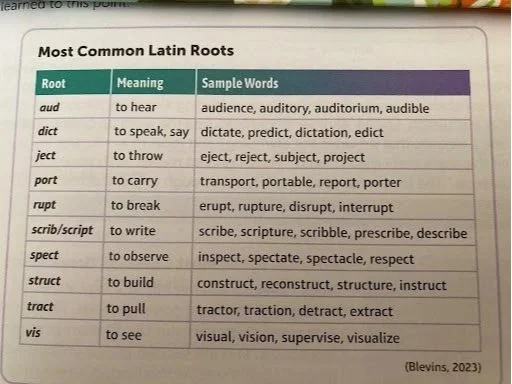
After common Latin roots, move on to common Greek roots, especially ones that start at the beginning of words.
How to Teach Roots
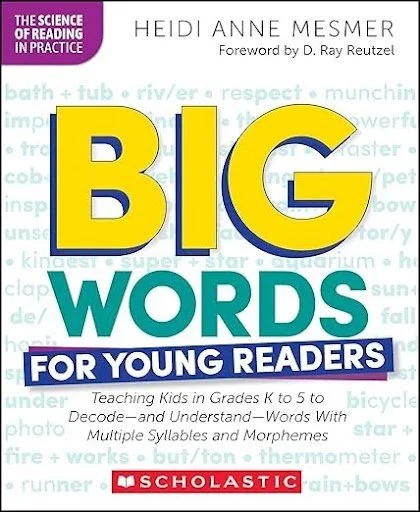
In her book, Big Words for Young Readers, Heidi Anne Messmer suggests using a Four part routine.
Define root.
Introduce the root you are teaching.
Read and underline the root in words.
Discuss the connection between the root and the meaning of each word.
This routine helps readers see and internalize the root. The last step is critical. Don’t skip it!
Root Strategies and Games
Games in Big Words for Young Readers - Heidi Anne Messmer
Peel It
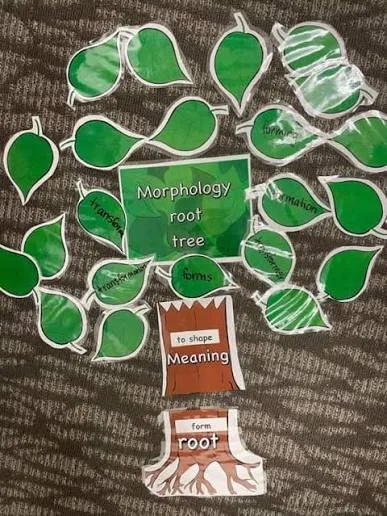
Word Root Trees
Morpheme Triangles
fcrr.org
Root Hoot
If the Clue Fits
Word Way
Word Matrix
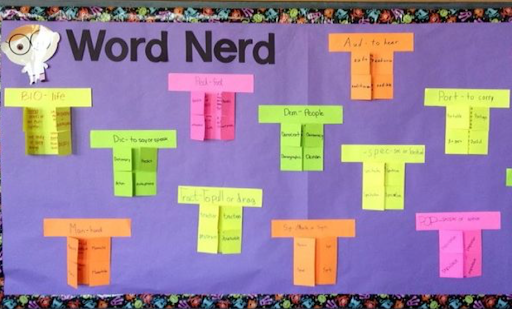
Mophology Walls and Notebooks
Bringing JOY to Morphology Instruction
Morphology doesn’t have to feel overwhelming—for you or your students. When suffix instruction is clear, intentional, and rooted in meaning, it becomes a powerful tool for unlocking vocabulary and deepening comprehension. By focusing on high-impact suffixes, explicitly teaching spelling patterns, and incorporating engaging practice, you’re giving students the building blocks they need to confidently make sense of new words. And the best part? This is just the beginning. Stay tuned as we continue building your morphology toolkit—because when students understand how words work, they don’t just read… they thrive.