
What You’ll Find Inside JOYcabulary Each Month
JOYcabulary is designed to support teachers and caregivers with practical, research-aligned vocabulary instruction that fits real classrooms and real lives. Each month, we publish multiple thoughtfully designed resources—simple to use, meaningful for students, and grounded in what we know about how children learn words best.
You’ll find no-prep vocabulary games, free printable lesson plans, and grade-specific activities that help children build strong word knowledge both at school and at home. Whether you’re teaching a brand-new lesson or refining an established routine, JOYcabulary provides clear, step-by-step ideas that make vocabulary instruction more intentional—and more joyful.
Throughout the year, we share new and emerging vocabulary strategies within the following core content categories:

Book Pairings
Just as a thoughtfully chosen wine can transform a meal, JOYcabulary’s Book Pairings connect rich read-aloud texts with ready-to-use vocabulary instruction. Each pairing includes carefully selected picture books alongside lesson plans that highlight high-utility Tier 2 words students encounter across content areas.
These resources are designed to be used immediately—no extra planning required—while helping students see how powerful vocabulary lives inside real, authentic texts.

Tip of the Month
The Tip of the Month offers short, high-impact instructional ideas that strengthen vocabulary instruction without adding to your workload. These quick tips focus on explicit instruction, meaningful repetition, and transfer, helping teachers make small adjustments that lead to stronger word learning.
Each tip is designed to plug seamlessly into any existing curriculum, allowing you to refine your practice while staying aligned with the Science of Reading.

Caregiver Corner
JOYcabulary believes vocabulary growth doesn’t stop at the classroom door. Caregiver Corner provides simple, accessible strategies families can use during everyday moments—especially bedtime reading—to support word learning at home.
Research consistently shows that repeated exposure to language across settings strengthens comprehension and retention. These practical tips empower caregivers to reinforce vocabulary in natural, low-pressure ways that support classroom instruction and build confidence with words.

Word JOY! (Grades 3–6)
As texts become more complex in the upper grades, vocabulary demands increase significantly. Word JOY! for Grades 3–6 offers targeted tools, tips, and resources for intermediate readers, including work with chapter books and content-rich texts.
These resources help students build the background knowledge and academic language they need to retain Tier 2 vocabulary, deepen comprehension, and engage more fully with what they read—all while keeping curiosity and joy at the center of learning.
Social Emotional Learning (SEL)
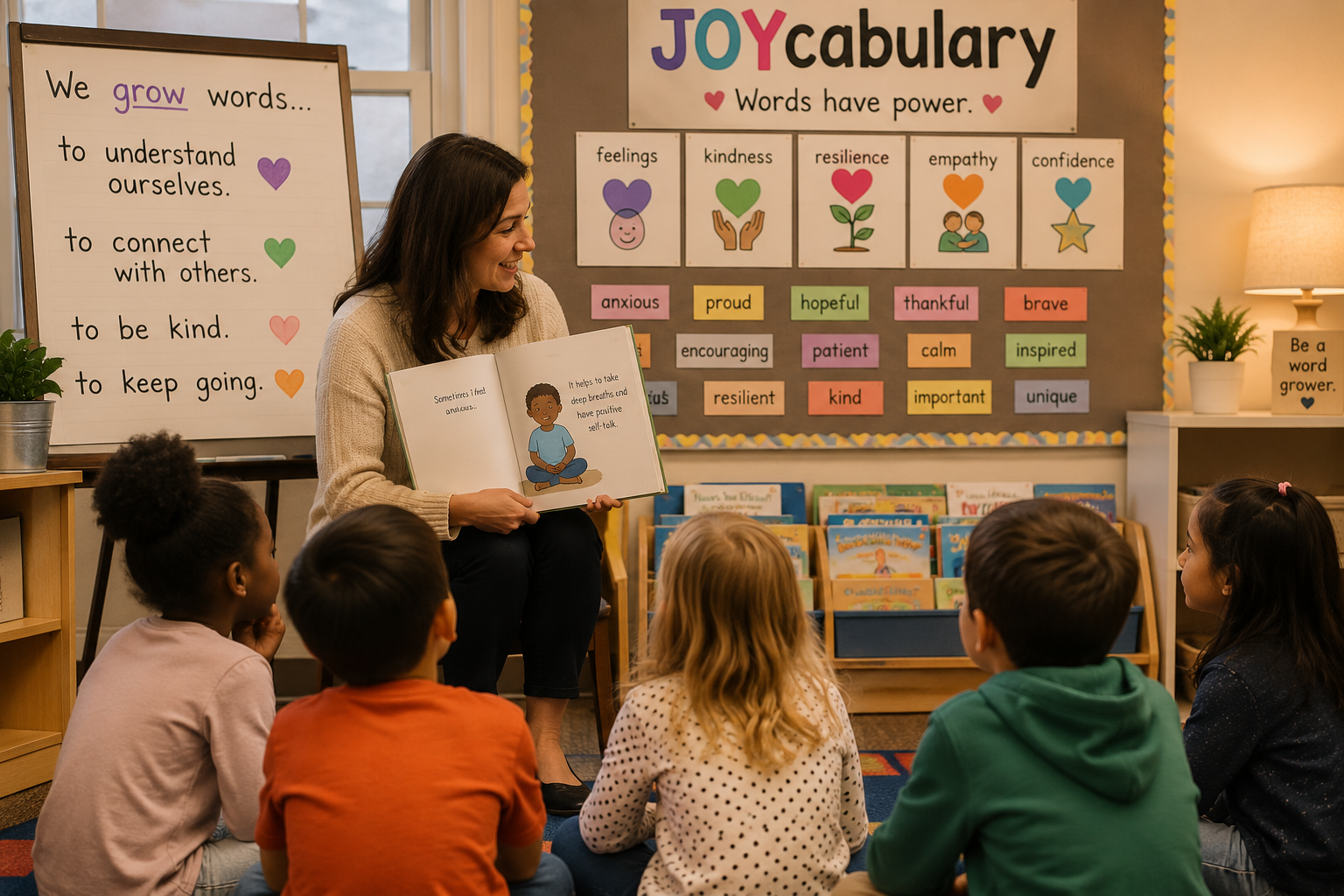
Books have the power to grow hearts and minds. Through the JOYcabulary approach, carefully chosen read-alouds build the vocabulary children need to understand, express, and manage their emotions. As students develop words for their feelings, they also build empathy, kindness, resilience, and the confidence to navigate challenges and meaningful conversations.
By growing words, we empower children to better understand themselves, connect with others, and thrive as compassionate learners. These lessons strengthen communication while supporting social-emotional growth in the classroom and at home.
Math/Science
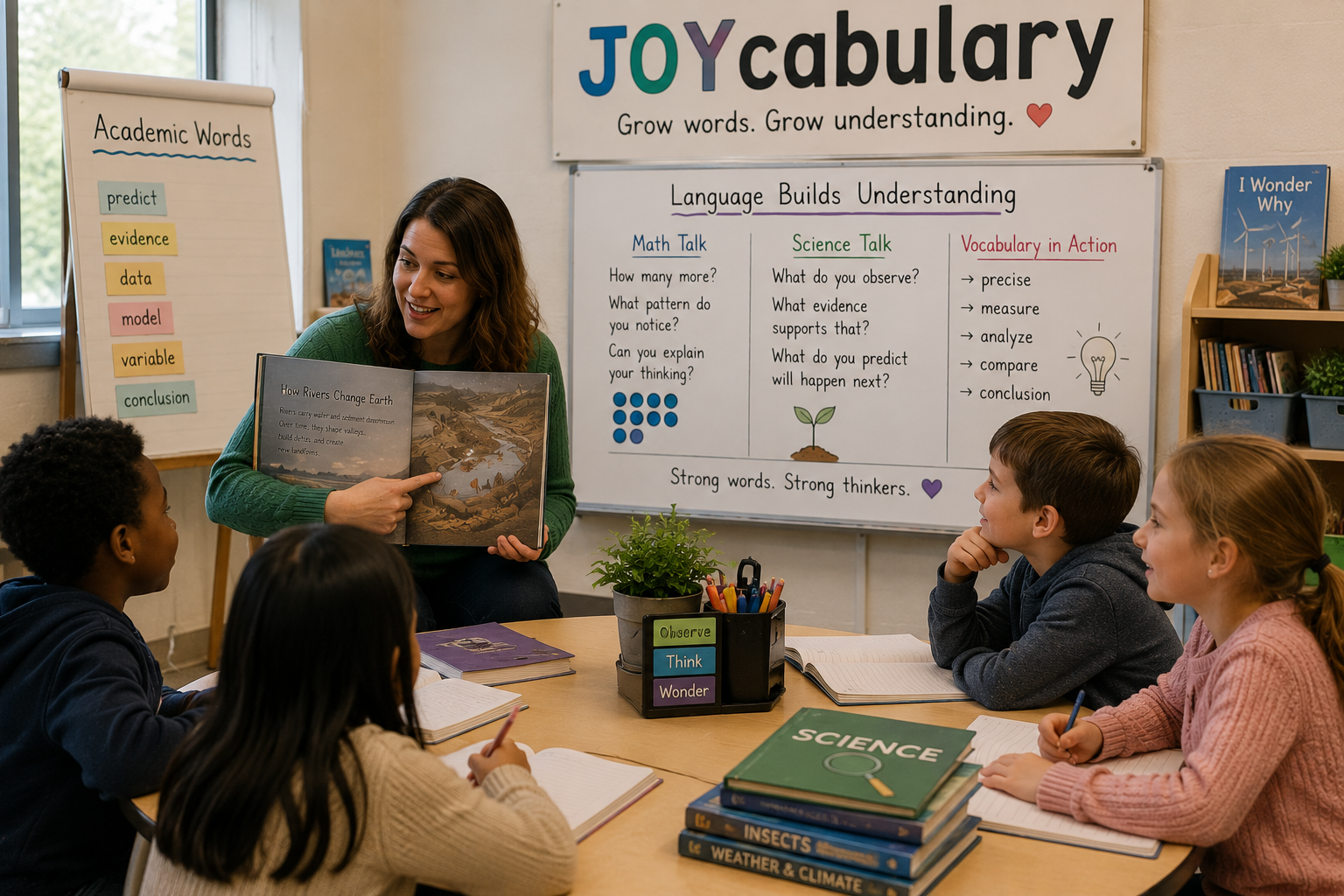
Rich read-alouds build students' vocabulary while deepening their understanding of math and science. Through purposeful discussions around high-quality picture books, students develop precise academic language, strengthen conceptual understanding, and build the background knowledge essential for learning.
These conversations naturally support ELA, mathematics, and science standards by fostering mathematical reasoning, scientific thinking, communication, problem-solving, and deeper comprehension across content areas.
Videos - JOYcabulary in Action
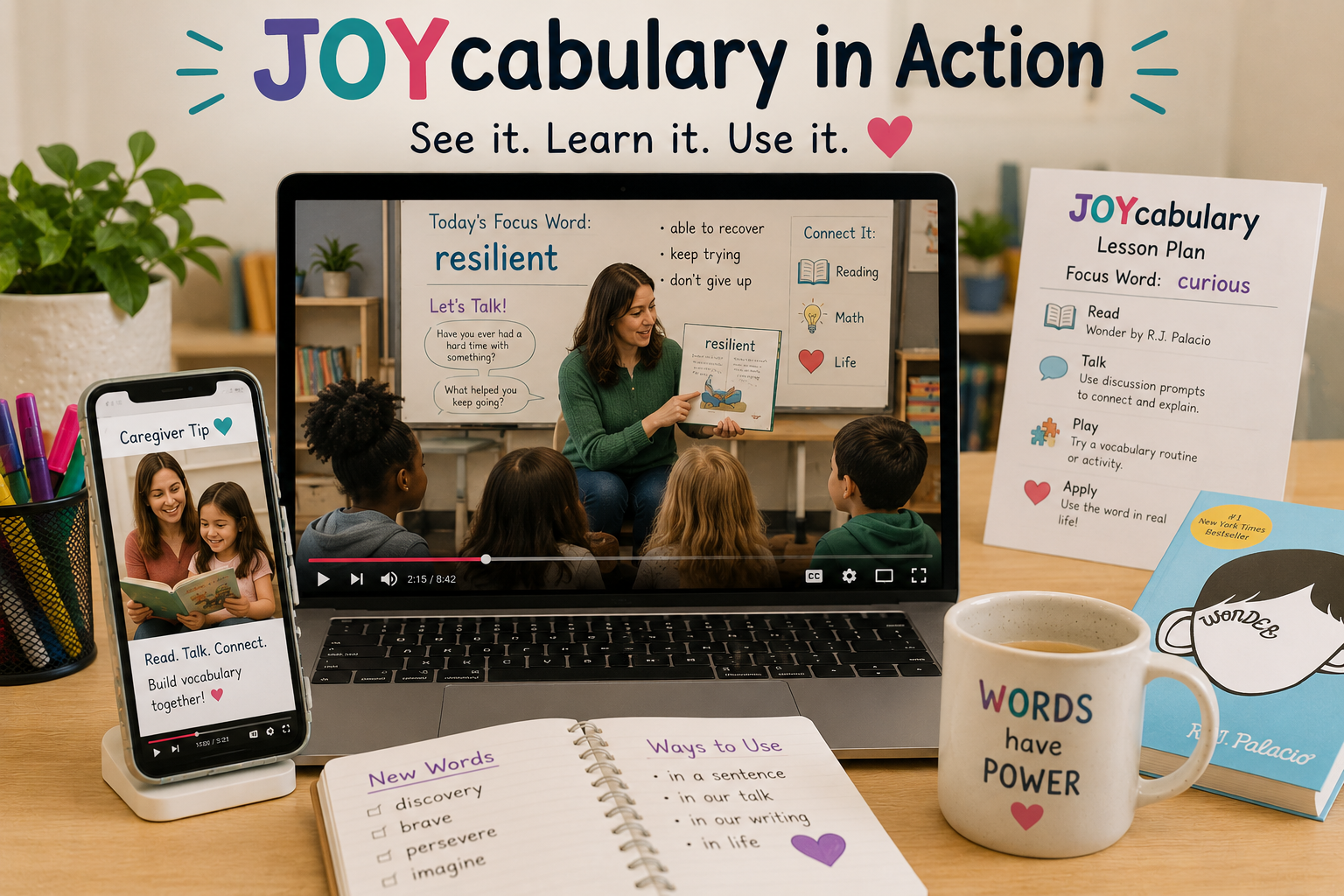
Seeing is believing! Explore our growing collection of classroom videos featuring real JOYcabulary lessons in action. Watch students engage in rich conversations, playful vocabulary routines, and meaningful learning across literacy and other content areas.
You'll also find caregiver videos that show just how easy it is to bring JOYcabulary home. Simply print one of our lesson plans, gather a book, and follow along as we model joyful, practical ways to build your child's vocabulary through everyday conversations and shared reading.
Whether you're an educator looking for classroom inspiration or a caregiver wanting to support learning at home, these videos make it easy to bring words to life—right away.
Why These Categories Matter
At JOYcabulary, our work is guided by one central belief: vocabulary grows best when instruction is intentional, repeated, rooted in real language experiences, and of course, JOYful. While literacy research continues to evolve—and we actively explore new and emerging strategies—these content categories remain the most consistent and critical drivers of meaningful vocabulary growth.
Each category reflects a core pillar of effective vocabulary instruction supported by research and classroom practice: exposure to rich language, explicit teaching of high-utility words, opportunities for repeated and meaningful use, and consistent reinforcement across settings.
Together, they form a system—not a series of isolated ideas—that supports vocabulary development over time.
Book Pairings anchor vocabulary instruction in authentic, high-quality texts, allowing students to encounter and apply new words in meaningful context.
Tip of the Month strengthens daily practice by helping teachers refine instruction in small, sustainable ways that build retention and transfer.
Caregiver Corner extends vocabulary learning beyond the classroom, recognizing the powerful role families play in repeated exposure and language development.
Word JOY! (Grades 3–6) addresses the growing vocabulary demands of upper-elementary texts, where comprehension increasingly depends on background knowledge and academic language.
Social Emotional Learning (SEL) helps students develop the vocabulary to understand, express, and manage emotions while fostering empathy, resilience, and meaningful communication.
Math/Science builds academic vocabulary and background knowledge through rich read-alouds, helping students deepen conceptual understanding and communicate their mathematical and scientific thinking with confidence.
Videos bring JOYcabulary to life through real classroom and caregiver demonstrations, making it easy to see effective vocabulary instruction in action and confidently apply it right away.
These categories are not trends. They are the instructional foundations we return to because they consistently support comprehension, assessment performance, and joyful engagement with language—across grade levels, settings, and learners.