
Joyful Vocabulary Instruction for Literacy Success
Bridge the gap between word recognition and reading comprehension with research-based, K-5 lessons—ready to teach in seconds.
JOYcabulary goes beyond rote memorization to help students truly own their language. Our Science of Reading-aligned curriculum uses rich, book-centered instruction to turn new words into confident writing and deeper reading. Experience the "ripple effect" of a classroom where students find their voice and teachers get their prep time back.

Why Vocabulary Is the Key to Better Comprehension and Higher Reading Scores
Vocabulary is the foundation of understanding and the strongest predictor of reading comprehension and assessment performance. When children know the words, they understand the text — and when they understand the text, they succeed. Yet for many classrooms, vocabulary instruction remains the weakest part of the literacy block.
JOYcabulary was created to close that gap.
We give teachers clear, research-based tools to teach vocabulary effectively, improve comprehension, and help students develop the deep word knowledge they need to thrive on grade-level texts and standardized tests.
Whether you're working to raise reading scores, support struggling readers, or strengthen your daily literacy instruction, JOYcabulary helps you bring vocabulary to life — simply, joyfully, and with real results.
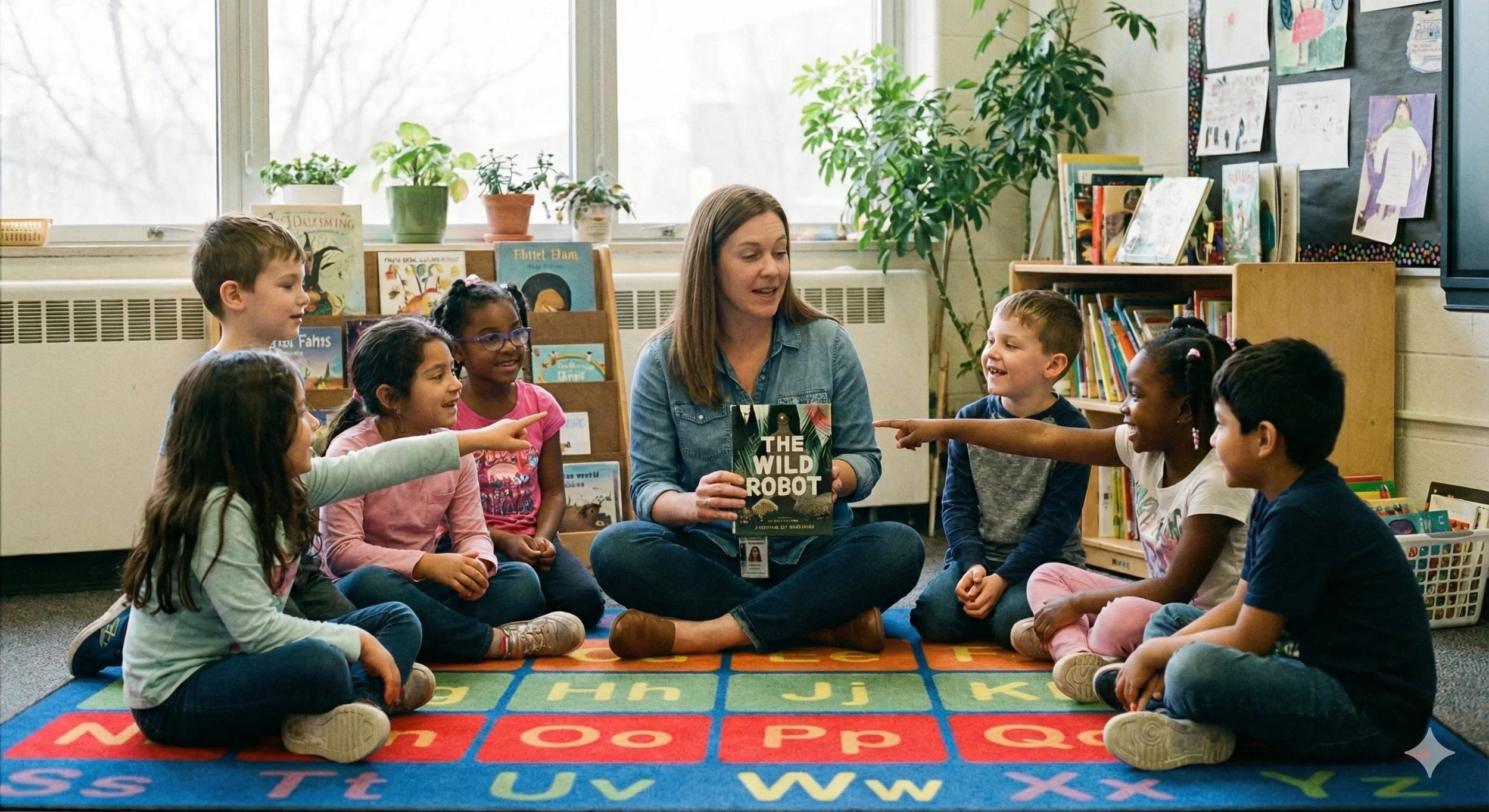
Most Students Can Read the Words - But Can They Understand Them?
From Decoding to Understanding: Why Vocabulary Matters
Students can decode eager — but can they explain how a character feels?
They can read compare — but do they understand what the question is asking?
Vocabulary instruction is the bridge between reading words and making meaning.
In today’s literacy landscape, teachers are doing more than ever to help students master the Science of Reading. Phonemic awareness. Phonics. Decoding. Fluency. These skills are essential — and teachers have worked tirelessly to improve them.
But decoding alone does not lead to comprehension. Most students who struggle on reading assessments do not struggle to read the words — they struggle to understand them.
The Missing Link is Vocabulary
Research shows:
Vocabulary knowledge is a primary driver of reading comprehension in the upper grades; as texts become more complex, understanding increasingly depends on knowing the words used to express ideas.
Students with weak vocabulary almost always score lower on ELA assessments, even when decoding is strong.
Understanding Tier 2 academic vocabulary (words like reveal, convey, indicate, contribute, express) directly impacts test performance.
Vocabulary must be taught explicitly, repeatedly, and in context for students to retain and apply new words.
Where the Science of Reading Leaves a Gap — and How JOYcabulary Fills It
The Science of Reading has transformed literacy instruction nationwide. Stronger phonics, clearer decoding routines, and improved foundational skills are a win for students — and a testament to the work teachers have done to implement them.
But many teachers are discovering a new challenge.
Most Science of Reading–aligned curricula offer limited, inconsistent guidance on vocabulary instruction, even though vocabulary is essential for comprehension. As a result, teachers are often left to figure out this critical piece on their own — on top of everything else they’re already managing.
That gap shows up in familiar ways:
Too few minutes in the day to plan intentional vocabulary instruction
Too little direction on how to teach Tier 2 academic words explicitly
Overreliance on context clues, which helps some students but leaves many guessing
Worksheets and isolated activities that don’t lead to lasting word knowledge
Students who decode fluently but struggle to explain, infer, or respond in writing
None of this means teachers are doing anything wrong.
It means the instructional materials haven’t fully caught up with what we know about how vocabulary supports comprehension.
We help teachers integrate explicit, meaningful vocabulary instruction into the literacy work they’re already doing — without adding another program, another prep burden, or another demand on their time.
What Makes JOYcabulary Effective
JOYcabulary fills a critical instructional gap in literacy by giving teachers practical, research-based tools to teach vocabulary in ways that actually stick.
Explicit Tier 2 Instruction
Our approach centers on explicit Tier 2 vocabulary instruction—the high-utility academic words students encounter across content areas and on state assessments. Through repeated exposure, oral language development, semantic mapping, and meaningful use, students don’t just learn words once—they retain and apply them.

Simple, Flexible Routines
We support teachers with simple, flexible routines that take just 2–10 minutes a day. Full lesson plans, quick routines, and adaptable tools fit seamlessly into any reading program—during read-alouds, small groups, morning meetings, literacy stations, or transitions.

Authentic Books and Poems
JOYcabulary lessons are built around authentic books and poems, not contrived passages. Rich, real texts model how powerful language works in context while simultaneously building background knowledge and deepening comprehension.

Social-Emotional Connection
Vocabulary learning is also intentionally connected to social-emotional development. As students build academic language, they also grow their emotional vocabulary—strengthening comprehension, expression, and empathy.

Above all, JOYcabulary is designed for real classrooms. No overwhelming prep. No extra programs to manage. Just joyful, effective vocabulary instruction teachers can use tomorrow. We help teachers move students beyond word calling—and into confident, curious users of language.
The JOYcabulary Promise: Practical Vocabulary Instruction That Works
JOYcabulary gives teachers research-aligned, ready-to-use vocabulary instruction that builds understanding, confidence, and joy—without adding more to the day.
With JOYcabulary, teachers can:

Teach vocabulary using clear, explicit instructional steps
Use ready-to-implement lessons built around beloved and newly released picture books
Establish daily routines that strengthen retention and transfer
Improve comprehension across narrative and informational texts
Build vocabulary and background knowledge in just minutes a day
Support reluctant, struggling, and confident readers alike
Align instruction with the Science of Reading while honoring child-centered learning
Prepare students for the increasing vocabulary demands of state assessments
Create joyful, meaningful literacy experiences that make words stick
Because when students understand the words, they understand the world.
Recognized Across Leading Literacy Conferences


Common Questions From Teachers
Why is vocabulary important for reading comprehension?
Vocabulary knowledge plays a central role in how well students understand texts. When too many words are unfamiliar, meaning breaks down and comprehension suffers. Strong vocabulary instruction is therefore essential for reading success.
How does vocabulary instruction fit into the Science of Reading?
The Science of Reading emphasizes decoding and word recognition, but equally important is the language comprehension side of the rope — vocabulary, background knowledge, and verbal reasoning. JOYcabulary strengthens this essential half of reading development.
Which vocabulary words improve test scores?
Tier 2 words (like reveal, contribute, express, and convey) appear frequently on tests. These words support both comprehension and writing skills.
How can I teach vocabulary if I don’t have much time?
Vocabulary can be effortlessly embedded into your daily read aloud. JOYcabulary’s routines take just 2–10 minutes a day and can be used during morning meeting, read-alouds, small groups, work stations, or transitions.
Is JOYcabulary aligned with best practices?
Yes. Our approach incorporates semantic mapping, repeated exposures, student-friendly definitions, oral language, SEL connections, and meaning-making — all supported by literacy research.
Does this work for struggling readers?
Absolutely. Whether a student’s challenges stem from decoding difficulties or gaps in vocabulary, Joycabulary is designed to support both simultaneously.
Does this work for English Language Learners?
You bet. In addition to broadening both Tier 1 and Tier 2 vocabulary, Joycabulary strengthens figurative language—an area of particular challenge for students new to English. Instruction incorporates word cards with visual support and the strategic use of gestures when appropriate.
Explore Our Free Resources
Looking for practical, research-based ideas you can use right away? Browse the Joycabulary blog for free lesson plans, vocabulary activities, literacy strategies, classroom tips, and professional learning designed to help every child build a rich vocabulary and a lifelong love of words.