A JOYcabulary Reset: Growing Words Through Play at Home
Happy New Year! Getting back into routines after a long break can feel hard for both kids and caregivers. The colder weather and shorter days can make the transition back to school challenging. Many schools also have end-of-the-quarter testing requirements that add pressure just as children are finding their footing again.
This month’s JOYcabulary caregiver tip is one you can fit into real life: slow down and play more at home.
Play is not something extra to add to your plate—it’s one of the most powerful ways children grow language and vocabulary in joyful, meaningful ways.
Why Play Is Powerful for Vocabulary Growth
Play naturally invites children to talk, describe, predict, and problem-solve. Whether they’re negotiating game rules, explaining their thinking, or noticing patterns in words, children are actively building word knowledge without it feeling like “work.”
Games and playful routines create low-pressure opportunities for conversation, which is where vocabulary truly grows. When children feel relaxed and engaged, they’re more willing to take risks with language, try new words, and deepen their understanding.
Growing Words Through Games at Home
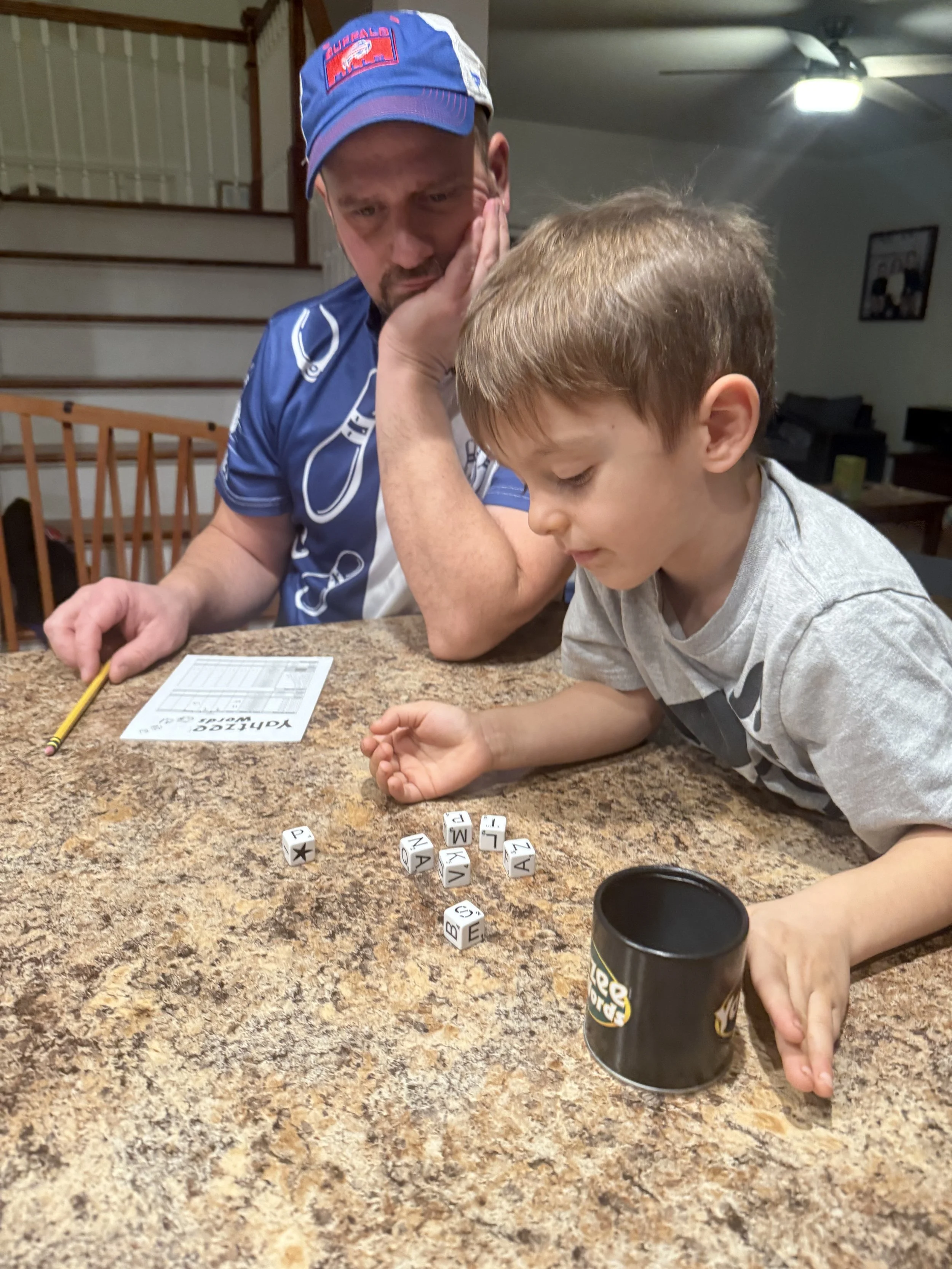
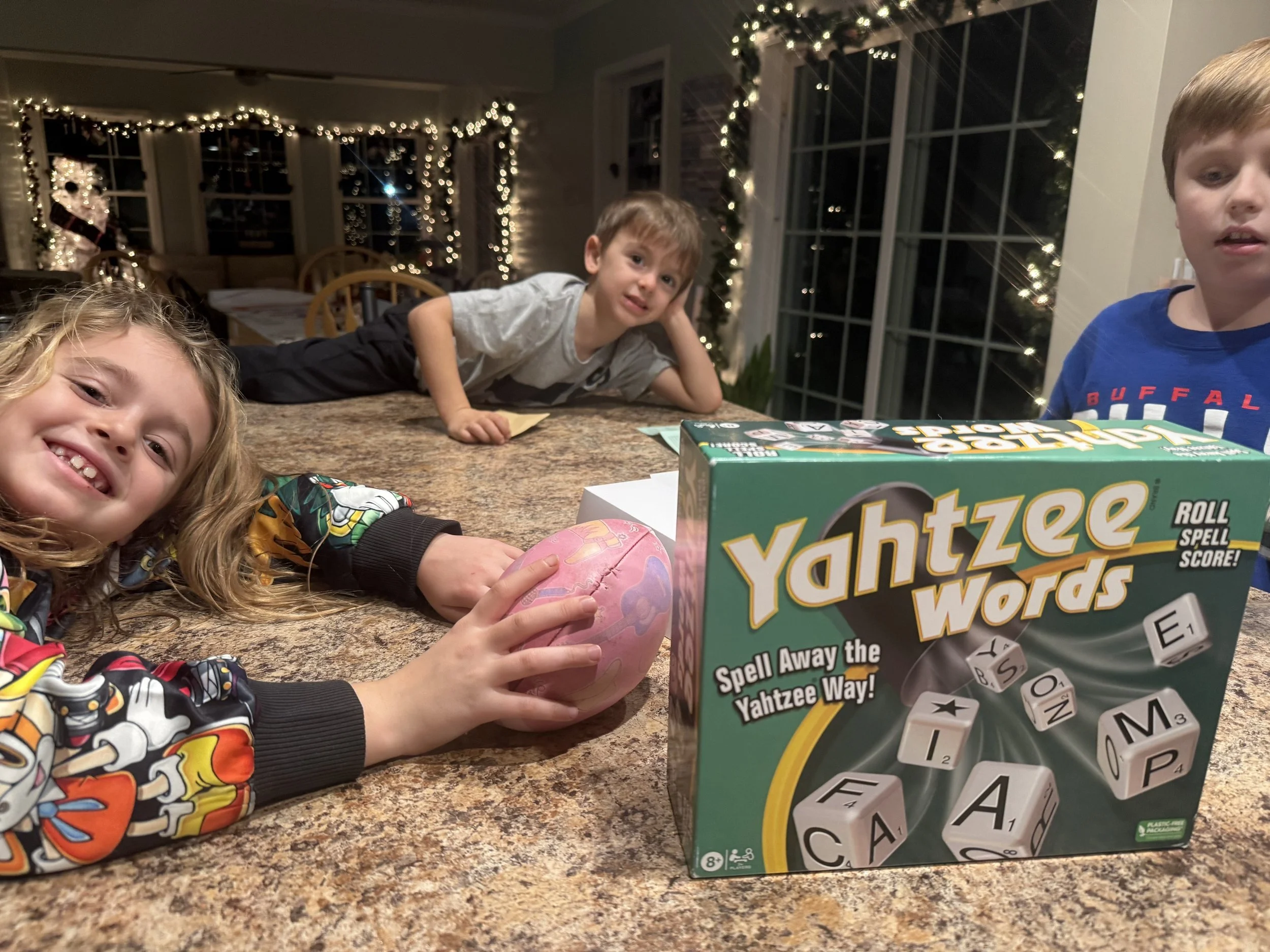
During winter break, my family spent a lot of time playing board games of their choice—favorites like Sorry, Trouble, and Uno. When school started back up, we kept the tradition going and gently shifted toward word-based games such as Word Yahtzee, Apples to Apples Jr., and Boggle.
I’ll be honest—my fourth grader grumbled when he saw Word Yahtzee. “Really, Mom?” But once we started playing, he was the one begging to finish the game.
A quick tip: some word games take time, so setting a timer helps. We often pause and pick the game back up the next night or when we can. These moments spark conversation, laughter, and strong word awareness without ever feeling like extra work.
Turning Screen Time Into Word Time
Another routine that’s been surprisingly successful in our home is watching Wheel of Fortune together. What started as a nostalgic favorite has turned into a fun, low-pressure way for children to predict letters, notice word patterns, and explain their thinking.
This cozy before-bed activity has strengthened family connection while nurturing a love for words. With a JOYcabulary lens, even screen time can become a meaningful language experience.
3 JOYcabulary Ways to Try This at Home
Read and notice words together.
If you have a reluctant reader, start by reading aloud and simply talking about the story. Gradually work up to taking turns reading one page at a time. Starting bedtime a bit earlier can help if your child says they’re not ready to sleep. Offer a choice: rest or read. To keep it playful, go on a “word hunt” together—looking for patterns like silent e or interesting new words.
Play word games that spark conversation.
Games like Word Yahtzee, Apples to Apples Jr., Scrabble Jr., or Boggle naturally build vocabulary, flexible thinking, and conversation skills.
Turn everyday routines into word time.
Watching shows like Wheel of Fortune together and inviting your child to guess letters, solve puzzles, and explain their thinking turns ordinary moments into joyful opportunities to grow language.
Small Playful Moments That Make a Big Difference
As we move into the new year, consider the simple routines you already have at home. Short moments of talking, playing games, or noticing words together can make a real difference over time.
What is one game, show, or bedtime habit you might try this week to help grow your child’s vocabulary in 2026?