

Blog Posts
Archive
- September 2026
- July 2026
- May 2026
- April 2026
- March 2026
- February 2026
- January 2026
- December 2025
- November 2025
- October 2025
- September 2025
- August 2025
- July 2025
- June 2025
- May 2025
- April 2025
- March 2025
- February 2025
- January 2025
- December 2024
- November 2024
- October 2024
- September 2024
- August 2024
- July 2024
- June 2024
- May 2024
- April 2024
- March 2024
- February 2024
- January 2024
- December 2023
- November 2023
- October 2023
- September 2023
- August 2023
- July 2023
- June 2023
- May 2023
- April 2023
- March 2023
- February 2023
- January 2023
- December 2022
Revealing Roots: A Simple Guide to Teaching Morphology with Confidence Part 3
Unlock the power of Latin and Greek roots to help students decode unfamiliar words, expand vocabulary, and deepen reading comprehension. In Part 3 of JOYcabulary's morphology series, you'll learn why roots are the foundation of so many English words and how explicit instruction in morphology supports strong readers and writers. This article explains the difference between base words and bound roots, explores the unique characteristics of Latin and Greek roots, and provides practical guidance for introducing roots in elementary classrooms. You'll discover why Latin roots often appear in academic vocabulary, how Greek roots are commonly found in science and mathematics, and simple ways to help students recognize meaningful word parts. The post also features Heidi Anne Messmer's four-step routine for teaching roots, recommendations for introducing the most common roots, and engaging classroom activities including Word Root Trees, Morpheme Triangles, Root Hoot, Word Matrix, and morphology notebooks. Perfect for teachers, reading specialists, interventionists, and caregivers looking to strengthen vocabulary, decoding, and morphological awareness through research-based literacy instruction.
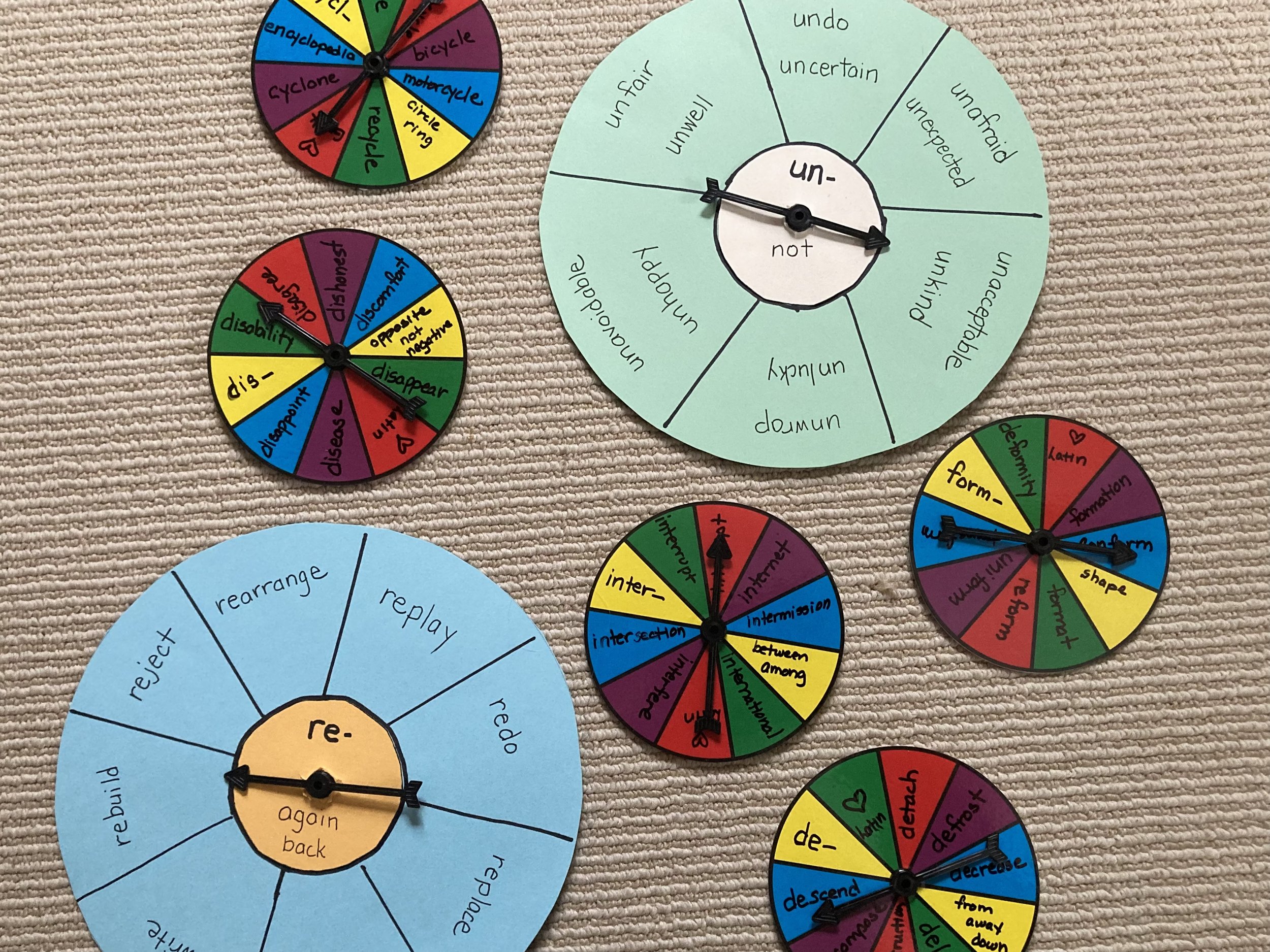
Preceding Prefixes: A Simple Guide to Teaching Morphology with Confidence Part 2
This Summer Tip of the Month introduces teachers to the foundations of morphology with a focus on prefix instruction. IDiscover how teaching prefixes strengthens decoding, spelling, vocabulary, and reading comprehension in this second post of JOYcabulary's morphology series. Learn why English is a morpho-phonemic language and how understanding morphemes helps students read and spell multisyllabic words more efficiently. This article explains the difference between syllable division and morphological analysis, introduces the three functions of prefixes (negate, intensify, and redirect), and shares simple strategies like the Base Word Test and Prefix Test to help students identify true prefixes. You'll also find the 20 most common prefixes found in English, recommendations for when to teach prefixes across elementary grades, and engaging classroom games including Prefix-O, Prefix Bingo, I Have, Who Has, and teacher-created activities. Whether you're a classroom teacher, reading specialist, interventionist, or caregiver, this practical guide provides research-based strategies to build strong word recognition, vocabulary, and morphological awareness.
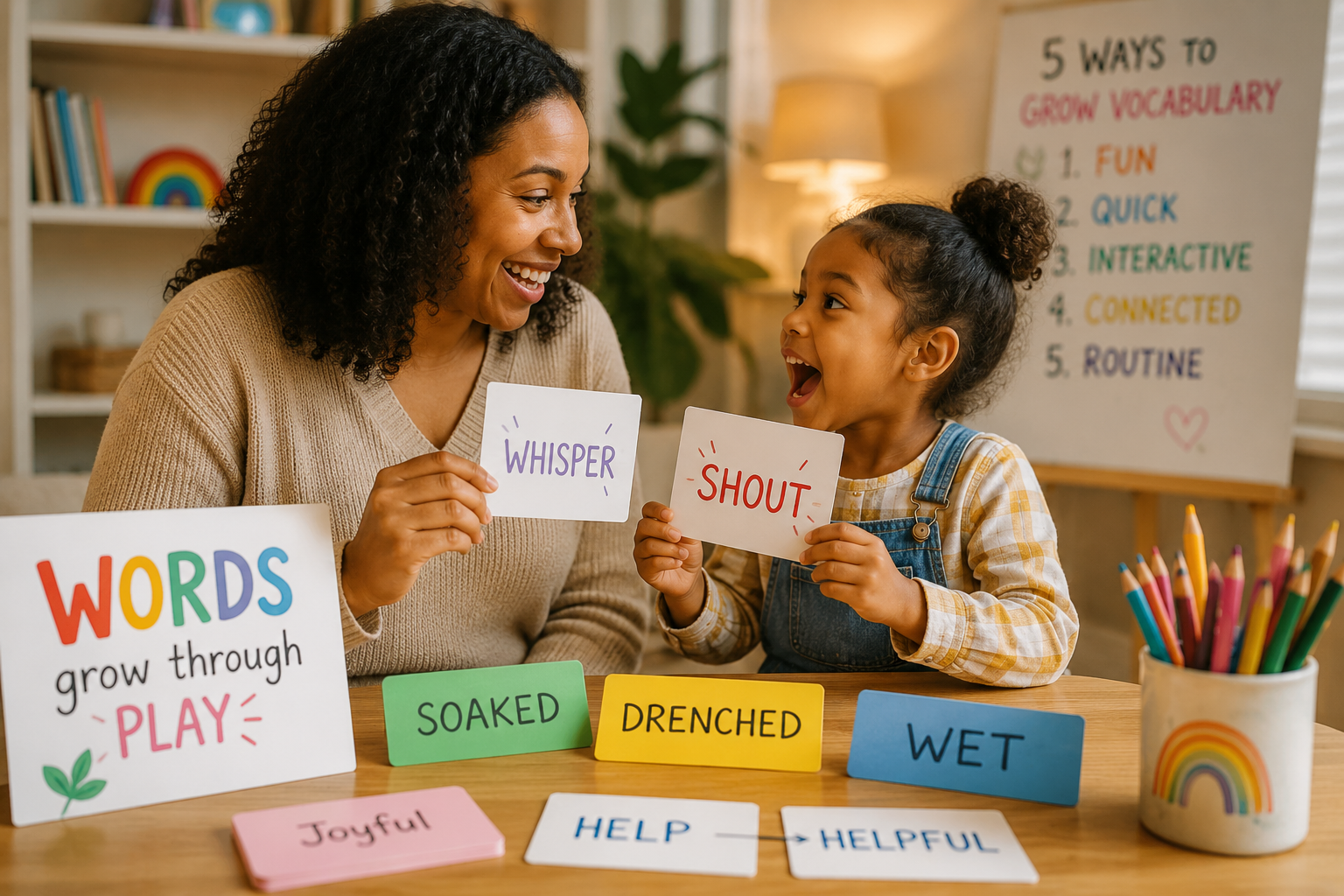
Growing Words Through Play: 5 Simple Ways to Build Your Child’s Vocabulary at Home
Children learn words best through play, not memorization. In this post, we share five simple, joyful ways to build your child’s vocabulary at home using quick, interactive, and meaningful moments that fit into everyday life.

Wet World: A Rainy Day Text Set for Vocabulary & Writing
This rainy day text set blends poetry, picture books, and science to build vocabulary and deepen student writing. Designed for grades K–3, it includes book pairings, interactive read-alouds, word collection systems, and writing extensions—all centered around the theme of rain. Perfect for National Poetry Month or weather units.

Word Joy: The Hidden Key to Understanding Test Questions
Spring testing season is here—and while students may understand reading skills like theme or structure, many struggle with the vocabulary used in test questions themselves. Words like convey, contribute, and reveal can become hidden barriers to success. In this Word Joy post, we explore how strengthening academic vocabulary helps students better understand what questions are asking, leading to stronger, more accurate responses on ELA assessments.

A Powerful Vocabulary Lesson with Pocket Bear: Building Meaning Through Story
This month’s Word Joy uses Pocket Bear by Katherine Applegate to teach vocabulary through meaningful context, discussion, and comprehension. Designed for short daily instruction, it integrates Tier 2 vocabulary with read-aloud strategies, character analysis, and theme exploration to help students build lasting understanding and deeper connections to text.

Savvy Suffixes: A Simple Guide to Teaching Morphology with Confidence
This March Tip of the Month introduces teachers to the foundations of morphology with a focus on suffix instruction. It clarifies key concepts like morphemes, roots, and bases while breaking down the difference between inflectional and derivational suffixes. Educators will learn why suffixes are critical for building vocabulary, how spelling rules connect to suffix use, and how to teach them through explicit, systematic routines. The post also provides practical classroom activities and games to make suffix learning engaging and meaningful for students.

Broken Hearts Suffix Game
The Broken Hearts Suffix Game is a low-prep, hands-on literacy activity perfect for word work stations. Students sort puzzle pieces, identify base words, and build new words by matching suffixes—then read and write the completed words for added reinforcement. Built-in challenges and easy variations allow teachers to differentiate for phonics, morphology, syllables, prefixes, or contractions, making this activity flexible, engaging, and highly effective for any early reader.

A JOYcabulary Reset: Growing Words Through Play at Home
Getting back into routines after winter break can feel overwhelming—for kids and caregivers alike. This JOYcabulary reset encourages families to slow down and grow vocabulary through play at home. From word games and shared reading to turning screen time into language-rich moments, these simple, joyful routines help children build strong word knowledge without pressure. Small moments of play can make a big impact all year long.
Your Word Is Your Wand: Reigniting Word Magic in Older Readers
As students grow older, their curiosity about words often fades—taking comprehension, clarity, and confidence with it. In this January 2026 reflection, Linda explores how precise language (“le mot juste”) can rekindle word consciousness in grades 3–8. Through a meaningful classroom moment, the Jenkins Curve, and a playful new routine featuring student “Word Wizards,” this post offers a joyful, low-pressure way to bring the magic of words back into learning—without relying on ineffective Word of the Day practices.
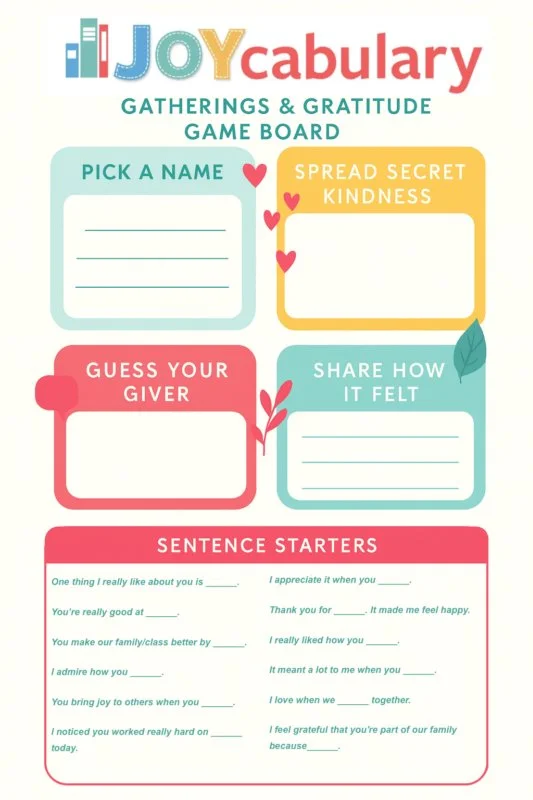
Secret Gratitude Givers: A Simple Family Game to Encourage Kindness and Gratitude
Bring calm and connection to your holidays with Secret Gratitude Givers — a joyful family game that teaches children to show kindness, gratitude, and appreciation. Perfect for Thanksgiving, vacations, or anytime your family needs a reset.

Building Vocabulary at Home: Simple Strategies for Growing Word Knowledge
Vocabulary Matters! This post gives you 3 quick tips for learning new words and ways you can build vocabulary text sets at home around topics your family loves (like an upcoming trip to Boston!).

Stir Up Some Magic With Powerful Words
Discover creative ways to celebrate words with a Halloween twist! “Magic Words” go beyond manners — they help students of all ages express empathy, describe characters, and connect with deeper themes. Try these classroom activities to turn your vocabulary lessons into something truly magical.