“Words are, in my not-so-humble opinion, our most inexhaustible source of magic.”
Albus Dumbledore
Harry Potter and the Deathly Hallows
J. K. Rowling
The Power of the Right Word
The French call it le mot juste—the exact and precise word for something—giving you the satisfying feeling of being able to express just what you mean. It’s like fitting the final piece into a jigsaw puzzle. Got it! Mark Twain captured this feeling perfectly when he wrote:
“The difference between the almost right word and the right word is… the difference between the lightning bug and the lightning.”
That difference matters. And yet, as students grow older, their relationship with words often changes.
Why Word Consciousness Declines as Students Get Older
The beginning of a new year is a time to reset. As I reflect on what that means for word acquisition for our older students (grades 3–8), my mind goes to two places: the Jenkins Curve and a classroom interaction with a sixth-grade student.
Developed by Dr. Lee Jenkins, the Jenkins Curve illustrates a sharp decline in students’ love of school and intrinsic motivation from kindergarten through high school. Enthusiasm for learning peaks at around 95% in kindergarten and plummets by ninth grade.
Word consciousness—the curiosity and interest in words—declines along this same curve. When curiosity about words fades, comprehension suffers. So does the clarity, precision, and complexity of students’ speaking and writing.
A Classroom Moment That Changed the Conversation
We were engaged in character work around a shared novel when one sixth-grade student spoke for well over a minute, using many vague words to describe a character. When she paused for breath, I asked her a simple question:
“So what’s the word for all of that?”
She looked at me, surprised.
“There’s a word for that?”
There was.
Ambivalent.
That moment stayed with me because of her profound realization that language has the power to clarify thought, and that knowing the right word can feel like a small revelation.
Bringing the Magic Back to Words
The question becomes: How do we reignite interest in words for older students?
Usually, I reach for a Launch Book. But this year, I want to try something different. This year, I want to try a resource book—one that brings the magic of words back in a playful, low-pressure way.
The Word Wizard Routine
Here’s the plan.
Each week, two students become Word Wizards.
The Word Wizards select three words to present to the class, leaning into the magic of three—three wishes, three kisses, three chances. The words come from Colossal Words for Kids: 75 Words Neatly Defined to Stick in the Mind by Colette Hiller (2024).
While the book is organized alphabetically, it is not a dictionary. Each word is presented through rhyme and designed to be read aloud so the meaning unfolds for the listener. Instead of offering a direct definition, the book invites students to infer meaning. Tucked into each entry are lifted sentences from published trade books that show the word in authentic use.
Here’s an example:
Contrite
If you’ve done something wrong
that you know wasn’t right
but you’re ever so sorry
then you are contrite.If you’re really contrite,
there really can’t be
any kind of but attached
to your apology!*“I’m sorry, but…” isn’t contrite.
It’s just an excuse to insist you are right!
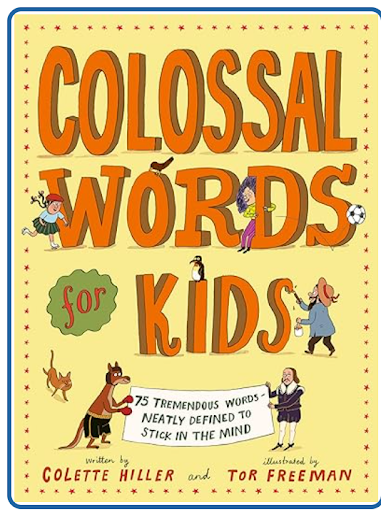
Colossal Words for Kids: 75 Tremendous Words Neatly Defined to Stick in the Mind
by Colette Hiller
Each poem in this funny, funky book teaches a specific important word, as well as its meaning and spelling, in an innovative and accessible format that kids will love. Using rhythm and wordplay, the poems help build a colossal vocabulary, thinking skills and literacy – without kids even noticing! But most of all, this book delights readers with the joy and silliness of the English language.
Vocabulary Instruction That Builds Curiosity and Confidence
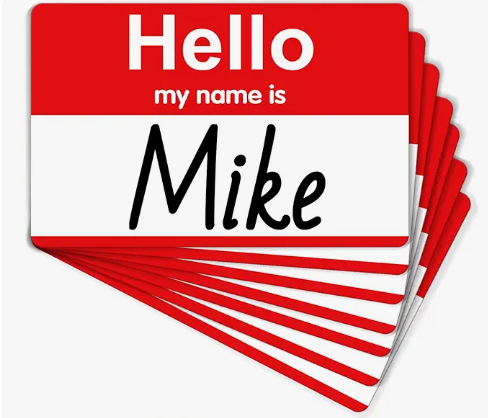
There are many options for extending this work. Students might record words and rhymes in a vocabulary notebook. The words could be posted for rereading or revisited during Morning Meeting. If the class is up for it, I may even offer “Hello! My name is…” badges for students to write one of the words and wear it for the day.
Why This Isn’t Word of the Day
Normally, I do not support ineffective practices like Word of the Day or Word of the Week. There simply aren’t enough meaningful exposures to make words stick.
This practice is different.
It’s intentionally short-term.
It’s playful.
And it’s designed to bring joy back to words.
A JOYful Reset for the New Year
This routine isn’t meant to replace robust vocabulary instruction. It’s meant to reignite curiosity. To remind students that words matter. That there is a word for what they mean—and that finding it can feel like magic.
Because your word?
It really is your wand.