Preceding Prefixes: A Simple Guide to Teaching Morphology with Confidence Part 2
English is not just about the phoneme-grapheme relationships we tend to focus on in the early grades. It is actually a morpho-phonemic language, meaning the sound-spellings we teach form meaning units that are critical in understanding longer words. Yes - we teach the six syllable types to help students decode multisyllabic words. However, as students advance through the grades, they are best served by locating the morphemes to unpack the meaning of the word.
Consider the word repopulate. We can think of this word in both syllable types and morphemes.
Syllables
re- (open syllable) + pop (closed syllable) + u (open syllable) + late (v-e syllable)
Morphemes
re- (prefix: again) + popul (root: people) + -ate (verb suffix: to make or cause to become)
One analysis leads to pronunciation and spelling. The other leads to meaning. Students need both!
However, it is important to remember that morphology can help a student decode and encode a word, not just lead to meaning. Think about the word masterful. A child could attempt to sound out all eight phonemes and try to blend to recognize the word. But if we prompt him to look for parts (base word/ suffix), it is a simpler approach. Ehri (2005) reminds us that graphemes build larger units, and skilled readers consolidate grapheme-based units as they decode. Children will not get past primary-level texts if they only understand the phoneme/grapheme, letter-by-letter alphabetic layer.
Prefixes: The Basics
Let’s start this morphology series with suffixes. A suffix is a bound morpheme - a meaningful unit that cannot stand alone. It must be attached to other morphemes. This is usually the type of affix that is taught first, usually beginning in Grade One.
Prefixes change the meaning of the word, but not its tense or part of speech.
There are three ways a prefix can change a word’s meaning:
Negate (unlock, misunderstand)
Intensify (overeat, superhuman)
Redirect (preview, midway)
Most prefixes are only one syllable and easy to decode.
Most are bound and cannot stand alone.
The Tricky Part
Students need to be taught how to determine if, in fact, the group of letters is a prefix and is adding meaning to the word. Think about the prefix re-
really reader retie realistic reptile
It is only in the word retie that the re- is a prefix! We have to teach students two ways to test if the group of letters is a prefix.
Base Word Test: Remove the prefix or group of letters. If you are left with a recognizable word, it’s a prefix.
Prefix Test: Take the prefix or group of letters and try to apply it to other words. Do they form recognizable words with the same meaning at the beginning?
Which Prefixes to Teach?
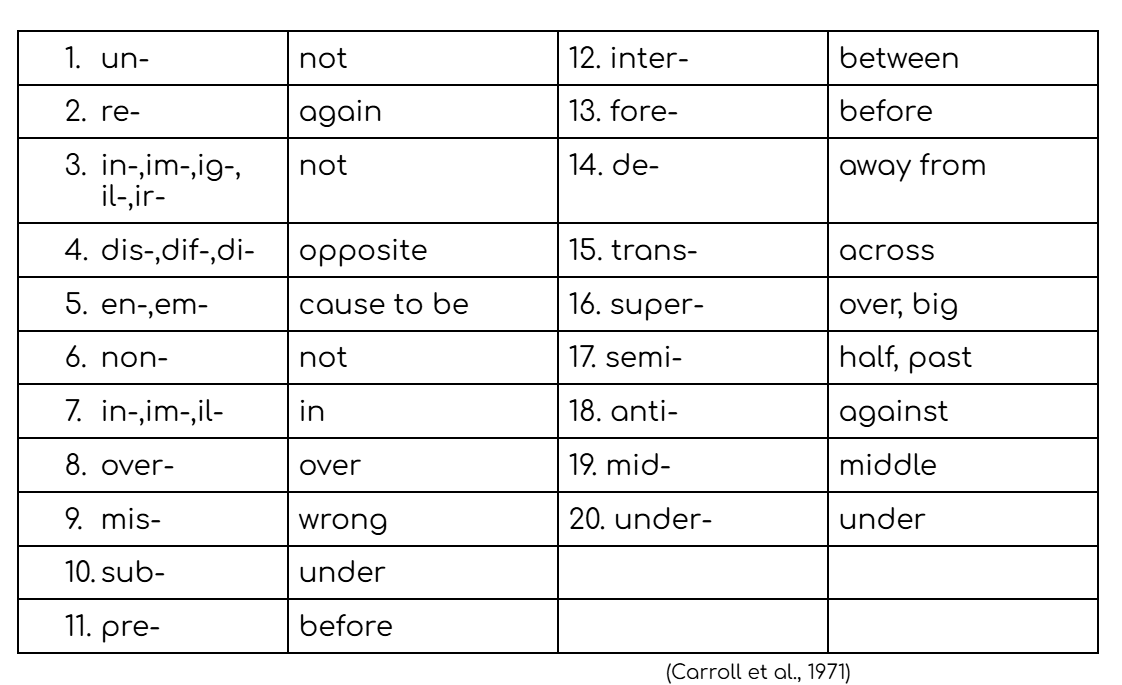
Most state standards tell you to teach ‘common prefixes.’ But which ones are common? Here are the 20 most frequent prefixes that appear in 97% of prefixed words.
When to Teach Prefixes
Prefixes are usually taught beginning in Grade 2 with the most common prefixes. Additional prefixes can be added in grades 3 through 5. In the intermediate grades, when you teach a new word, be sure to teach the affixed forms of that word. For example, if you teach the word revolt, also teach revolts, revolting, revolution, prerevolution, revolutionary, and antirevolutionary.
Engaging Prefix Activities for the Classroom
I Have, Who Has
Prefix Bingo
Prefix-O (from fccr.org)
Teacher-created Games
Spinners
Word Card Sort
Prefix/ Not a Prefix
Concentration
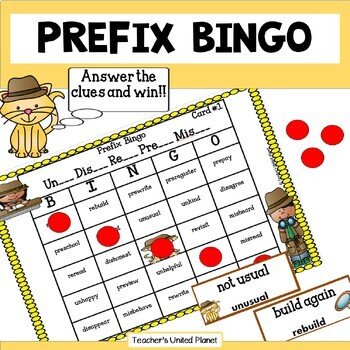
Many of these games you can find on TPT or make your own.
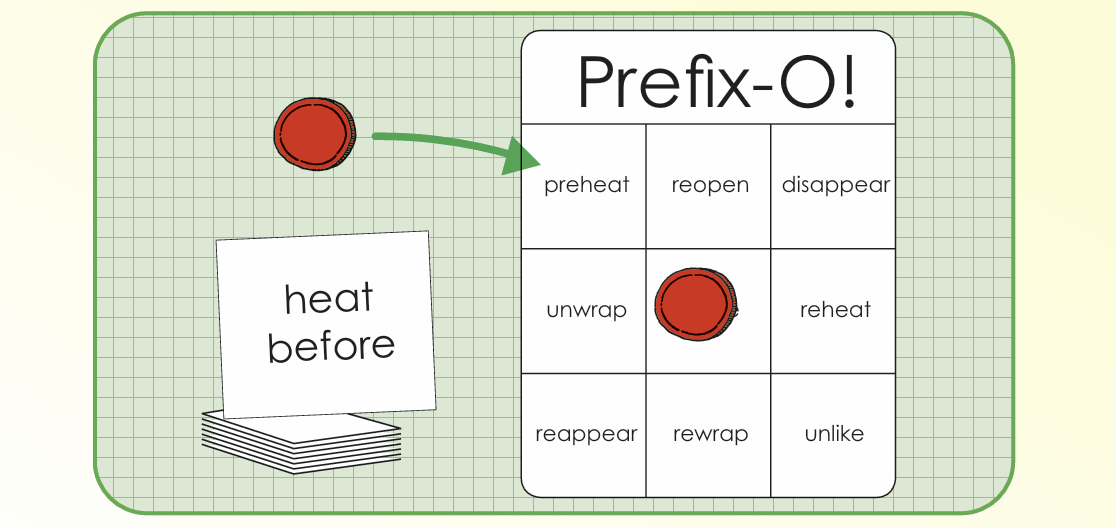
Search Vocabulary and Morphemic Elements at fccr.org
Bringing JOY to Morphology Instruction
Morphology doesn’t have to feel overwhelming—for you or your students. When suffix instruction is clear, intentional, and rooted in meaning, it becomes a powerful tool for unlocking vocabulary and deepening comprehension. By focusing on high-impact suffixes, explicitly teaching spelling patterns, and incorporating engaging practice, you’re giving students the building blocks they need to confidently make sense of new words. And the best part? Stay tuned as we continue building your morphology toolkit—because when students understand how words work, they don’t just read… they thrive.